List of Research Achievements and Results
List of Research Achievements and Results
Molecular mechanisms of neuronal dysfunction mediated by miR-199a in MECP2 duplication syndrome
Molecular mechanisms of neuronal dysfunction mediated by miR-199a in MECP2 duplication syndrome
Information to be released
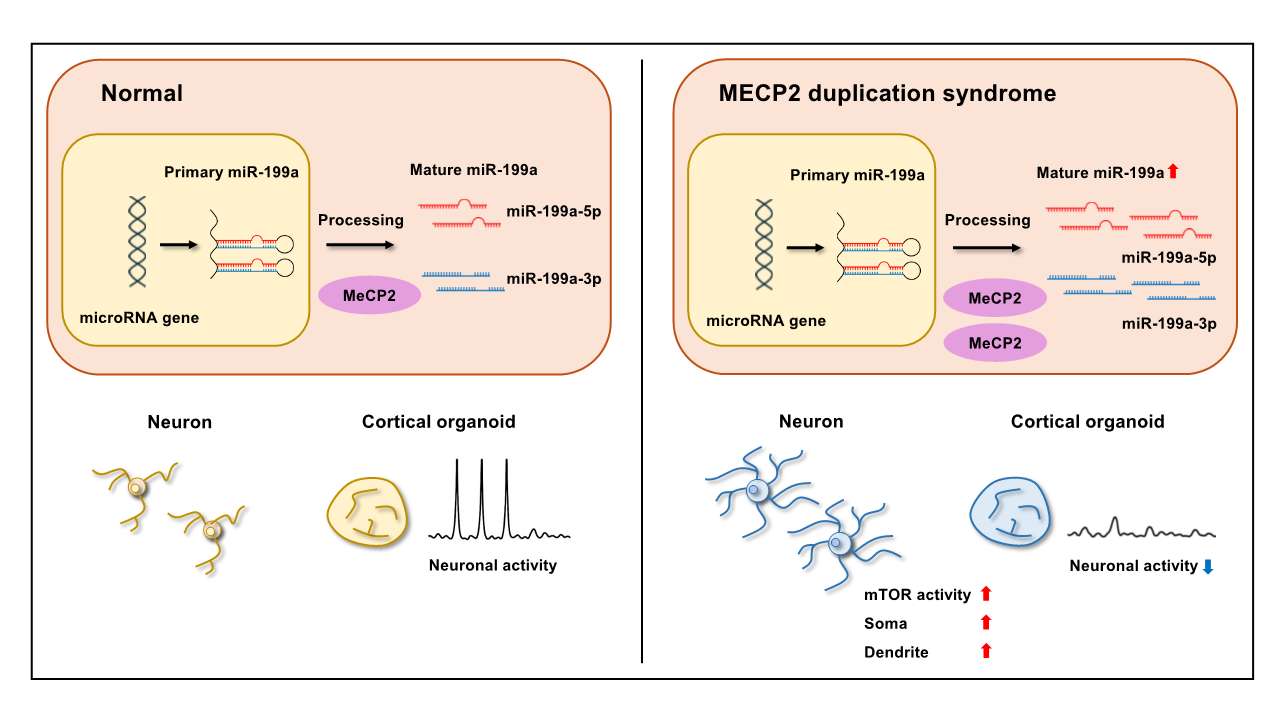
MECP2 duplication syndrome (MDS) is a severe neurodevelopmental disorder caused by an increased copy number of the MECP2 gene and is characterized by intellectual disability and epilepsy. MeCP2 is an important epigenetic regulator of neuronal function; however, the molecular mechanisms underlying pathology due to gene dosage abnormalities remain incompletely understood. In this study, using a mouse model and patient-derived induced pluripotent stem cell (iPSC)-derived neurons, we identified that a microRNA, miR-199a, is upregulated downstream of MeCP2. miR-199a regulates cellular growth through pathways including the mTOR signaling pathway, and its inhibition led to an improvement in neuronal morphological abnormalities. Furthermore, abnormal neuronal activity was observed in patient-derived cortical organoids, and suppression of miR-199a partially ameliorated these abnormalities. Because MeCP2 expression requires precise regulation, directly targeting MeCP2 poses therapeutic challenges. In contrast, targeting downstream molecules may represent a potential therapeutic strategy. This study provides new insights into the molecular pathology of MDS and offers a novel perspective for the development of therapeutic approaches.
<Explanation of Terms>
Epigenetic: Mechanisms that regulate gene expression without altering the DNA sequence.
iPS cells: Artificially generated stem cells capable of differentiating into various cell types.
microRNA: Short non-coding RNAs that regulate gene expression at the post-transcriptional level.
mTOR signaling pathway: A key signaling pathway that regulates cell growth and metabolism.
Organoid: A three-dimensional cell structure derived from stem cells that recapitulates aspects of organ structure and function.